

Mowing Height Matters: The Summer Mowing Rules Every NWA Homeowner Should Know

Updated: Jun 17
If there's one lawn care mistake that Northwest Arkansas homeowners make more than any other, it's mowing too short in the summer heat.
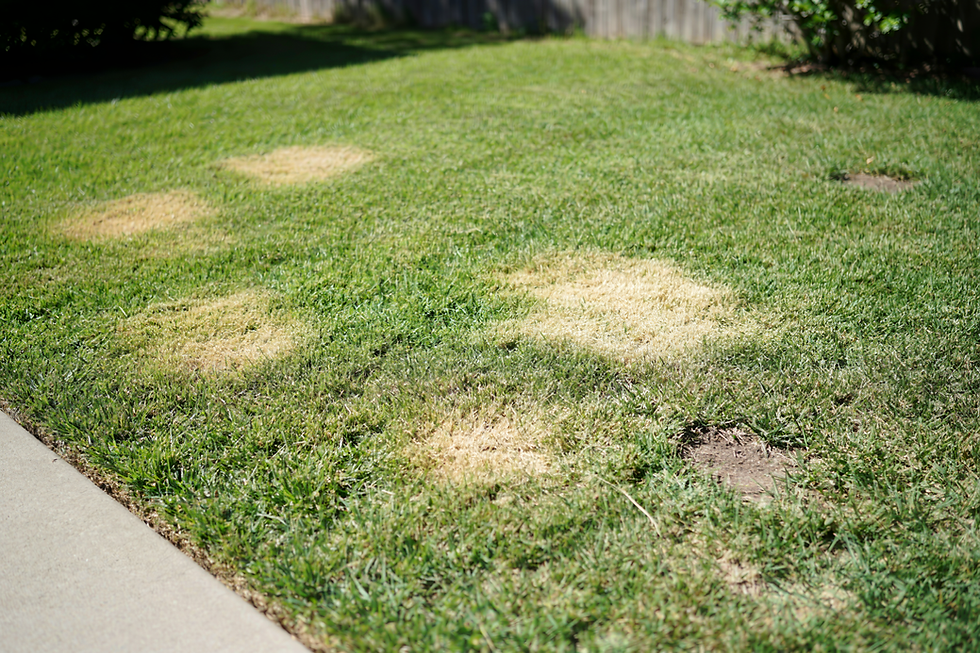
It feels counterintuitive. Short grass looks neat. It seems like it would grow back slower, meaning less work. But here's the reality: scalping your lawn in June, July, or August in Fayetteville, Prairie Grove, or Bentonville is one of the fastest ways to end up with a stressed, weed-riddled yard that takes the rest of the season to recover — if it recovers at all.
Mowing height is one of the most powerful levers in residential lawn care, and most homeowners never think about it. This post breaks down the right heights for every grass type common to NWA, why the one-third rule exists, and how your weekly mowing schedule in summer is one of the best weed control tools you have.
Already falling behind on summer lawn maintenance? Contact Prograde Lawn & Landscape today for a free estimate — we serve Fayetteville, Prairie Grove, Springdale, Rogers, Bentonville, and surrounding Northwest Arkansas communities.
Why Mowing Height Is a Lawn Health Decision, Not Just an Aesthetic One
Grass blades are how your lawn feeds itself. The green leaf tissue above the soil is where photosynthesis happens — where your turf converts sunlight into the energy it needs to maintain root systems, resist disease, and push back against weeds.
When you cut too low, you remove a disproportionate share of that leaf tissue. The plant has to redirect stored energy to recover rather than building roots or defending against stress. In the brutal Arkansas summer — where temperatures regularly push past 90°F and drought can settle in for weeks — that's energy your lawn cannot afford to spend.
Cut at the right height, and you get the opposite effect. A taller blade creates a denser canopy that shades the soil surface, retains moisture, suppresses weed germination, and keeps root systems deeper and more resilient.
This is especially critical for homeowners in the NWA area, where cool-season grasses like tall fescue are pushed to their absolute limit from June through August, and where warm-season grasses like Bermuda and Zoysia are growing aggressively and need managed stress to perform their best.
The Right Mowing Height for NWA Grass Types
Tall Fescue: 3.5 Inches (Never Below 3)
Tall fescue is one of the most common grass types in Northwest Arkansas residential lawns — it's the cool-season workhorse of the region, found everywhere from Farmington to Centerton. It's also the grass most commonly destroyed by summer scalping.
In summer, tall fescue should be mowed at 3.5 inches — and that's a floor, not a suggestion. Going below 3 inches during peak heat puts fescue under severe stress. The shallow canopy exposes the soil to direct sun, drives up soil temperatures, accelerates moisture loss, and opens the door wide for crabgrass, goosegrass, and other opportunistic weeds.
Taller fescue also develops a deeper, more drought-resistant root system. That matters enormously in an NWA summer when you might go two or three weeks without meaningful rainfall.
The bottom line for fescue lawns: keep it tall, keep it consistent, and never scalp it trying to buy yourself an extra week between mows.
Bermudagrass: 1 to 1.5 Inches
Bermuda is the dominant warm-season turf in the warmer pockets of NWA, including a lot of the established neighborhoods in Springdale, Rogers, and Bentonville. Unlike fescue, Bermuda thrives when cut short — but "short" has a limit.
The ideal mowing height for residential Bermuda lawns in summer is 1 to 1.5 inches. Cutting below an inch risks scalping, particularly when the turf isn't perfectly level or the mower deck isn't precisely calibrated. Above 2 inches, Bermuda starts to develop a dense thatch layer that restricts airflow, promotes disease, and makes the lawn feel spongy and uneven underfoot.
Bermuda responds well to frequent mowing during its peak growth period (May through August). Weekly cuts at the correct height encourage lateral growth, density, and a tight, carpet-like surface that's harder for weeds to penetrate.
Zoysia: 1.5 to 2.5 Inches
Zoysia is the third major grass type you'll find in Northwest Arkansas residential lawn care, and it occupies a sweet spot between the requirements of fescue and Bermuda. It's drought-tolerant, heat-resistant, and it develops a thick, dense canopy that naturally suppresses weeds — when mowed correctly.
The ideal summer mowing height for Zoysia is 1.5 to 2.5 inches, depending on the specific variety. Empire and Palisade Zoysia, common in NWA, do well at the higher end of that range. Japanese Zoysia can handle lower cuts.
Like Bermuda, Zoysia benefits from sharp blades and consistent mowing. A dull mower blade tears Zoysia rather than cutting it cleanly, leaving frayed tips that turn brown and create entry points for disease.
Not sure what grass type you have in your NWA lawn? Call Prograde Lawn & Landscape and we'll identify your turf and set up a mowing program built for it.

The One-Third Rule: Why It Exists and Why You Should Follow It
The one-third rule is one of the oldest principles in professional lawn maintenance — and one of the most consistently ignored by homeowners.
The rule is simple: never remove more than one-third of the grass blade's height in a single mowing.
If your tall fescue is at 5 inches and you want it at 3.5, you don't cut it down in one pass. You mow to 4.5, let it recover for a few days, then take it to 3.5. Removing more than a third of the blade in one session sends the plant into recovery mode — it stops root development, redirects energy to regrowth, and becomes temporarily vulnerable to disease, drought, and weed pressure.
In practical terms, the one-third rule means this: if you let your lawn get too long, the correct solution is never to scalp it back down in one cut. That's the instinct — but it's the wrong move. Take it down gradually.
It also means that in summer, when warm-season grasses are growing fastest, you may need to mow more frequently than you think — sometimes every five to six days — to stay within the one-third threshold at the correct height.
Weekly Mowing in Summer Is Weed Control
Here's something the best lawn care companies in Northwest Arkansas have known for years: consistent, properly-timed mowing is one of the most effective weed suppression tools available.
Weeds — crabgrass, goosegrass, spurge, broadleaf plantain, and others common to NWA lawns — depend on light reaching the soil surface to germinate and establish. A dense, properly-mowed turf canopy denies them that light. It shades the soil, maintains even moisture, and creates conditions that favor your desirable grass over opportunistic weed species.
But this only works if the mowing is consistent. Skip two or three weeks in July and your lawn doesn't just get shaggy — it creates the exact conditions weeds need to establish. You're giving up your competitive advantage.
Weekly mowing in summer also removes any emerging weed seedlings before they can set root, flower, or — critically — go to seed. A single crabgrass plant left un-mowed can produce tens of thousands of seeds before fall. Cut it down every week and it never gets there.
This is why professional lawn mowing service in Fayetteville and the broader NWA area isn't just about appearances. It's active turf management. The homeowners with the cleanest, most weed-free lawns in August aren't necessarily spending more on herbicides — they're mowing on schedule, at the right height, with the right equipment.
Mower Blade Sharpness: The Detail That Separates Good Mowing From Great Mowing
One more variable worth mentioning: blade sharpness.
A dull mower blade doesn't cut grass — it tears it. The torn tips turn brown, leaving your lawn looking ragged even right after mowing. More importantly, torn grass tissue is an open wound. It invites fungal disease, dries out faster, and puts additional stress on turf that's already working hard to survive an NWA summer.
Sharp blades produce a clean cut. The grass tip heals quickly, the lawn retains moisture better, and the visual result is dramatically better — that sharp, well-defined look you see in lawns that are clearly being maintained by someone who knows what they're doing.
Professional lawn care companies sharpen or replace blades regularly as part of their equipment maintenance. It's one of the many small details that separate professional lawn mowing service from a quick pass with whatever's in the garage.
Prograde Lawn & Landscape: NWA's Mowing Professionals
At Prograde Lawn & Landscape, we don't just cut grass — we manage turf. Every mowing visit is calibrated to your specific grass type, the time of season, and what your lawn needs to stay thick, healthy, and weed-resistant through the hottest months of the NWA summer.
We serve residential properties throughout Fayetteville, Prairie Grove, Farmington, Lincoln, Springdale, Rogers, Bentonville, Centerton, Cave Springs, and surrounding Northwest Arkansas communities. Whether you're a tall fescue homeowner trying to survive August or a Bermuda lawn that needs tight, consistent maintenance through peak growth season, we have the equipment, the schedule, and the expertise to keep it looking its best.
Stop guessing on mowing height. Stop letting the summer get away from you. Get a free estimate from Prograde Lawn & Landscape today and find out what a professional lawn mowing and maintenance program looks like for your specific NWA yard.
Call or text: 479-586-3858 | progradefayetteville@gmail.com
Serving Fayetteville · Prairie Grove · Springdale · Rogers · Bentonville · Centerton · Cave Springs · Farmington · Lincoln · Northwest Arkansas


Comments